

Medicine Guides
Coralcal DX 600 mg Price in Bangladesh: Uses and Safety
Coralcal DX 600 mg combines calcium and vitamin D to support bone health. Learn how it works, common side effects, and when you should see a doctor.
7 min read
We are actively adding and checking records. If something is missing or looks wrong, please tell us, our team is working through reports. Report it
Many people search Cef 3 400 mg price before buying, but it is more important to know what this antibiotic is, how to take capsule or syrup, and when to see a doctor.
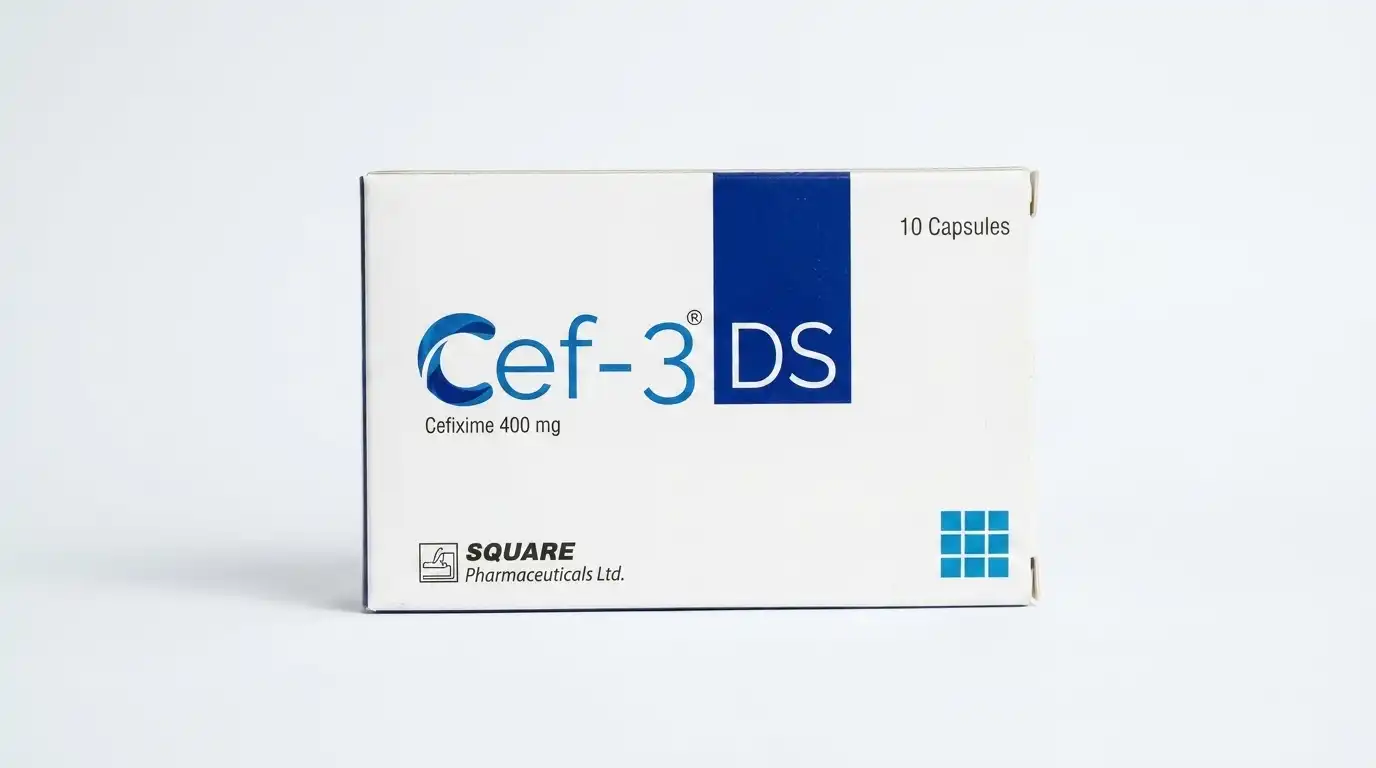
Cef 3 is a commonly used antibiotic brand in Bangladesh that doctors prescribe for different bacterial infections. People often search for Cef 3 400 mg price, but using the right strength in the right way is more important than only comparing cost.
Price checked
| Brand | Per unit | Per strip |
|---|---|---|
| Cef-3 DS 400 mgSquare Pharmaceuticals PLC · Capsule · Pack 2 x 7 | ৳60.00 | ৳420.00 |
Cef 3 is an antibiotic medicine that helps your body fight bacterial infections when your doctor thinks an antibiotic is needed. It does not work for viral illnesses like simple flu or most common colds, so you should only take it on a registered doctor’s advice.
This brand comes in different strengths and forms so that doctors can match the dose to your age, body weight and kidney condition. Because it is an antibiotic, you should never start it on your own based on an old prescription or advice from a neighbour.
In Bangladesh, Cef 3 is available in several capsule, tablet and liquid forms so that both adults and children can be treated as your doctor decides.
| Form | Example strengths | Typical use |
|---|---|---|
| Capsule | 200 mg, 400 mg | Usually prescribed for adults or older teenagers who can swallow capsules |
| Tablet | 200 mg, 400 mg, 500 mg | Alternative solid form when the doctor prefers tablets |
| Suspension or syrup | Measured in mg per 5 ml as written on pack | Liquid form that doctors may choose when they want an easier option to swallow |
| DS syrup | Higher strength per 5 ml than regular syrup | Used when the doctor wants a stronger liquid dose in a smaller volume |
The exact strength, dose and form suitable for you or your child must come from a registered doctor. Do not change between capsule, tablet and syrup yourself without medical advice, because the amount of antibiotic in each can be different.
You should always take Cef 3 exactly the way your doctor wrote on the prescription and as the pharmacist explained. Swallow capsules or tablets with a glass of clean water, and do not crush or chew them unless your doctor clearly allows it.
For suspension or syrup, shake the bottle well before every dose so the medicine mixes evenly. Use the supplied measuring cup or spoon, not a household spoon, so that you do not take too little or too much. If your doctor mentions food, follow that advice, otherwise keep the timing as regular as possible, such as the same time each morning and night.
Never take someone else’s Cef 3, and do not share your leftover capsules or syrup with family members. If you are already on several medicines, ask your doctor or pharmacist to explain possible drug interactions or read more about them in detail in the article on drug interactions.
You should continue Cef 3 for the full number of days written on your prescription, even if you start to feel better earlier. Stopping on your own as soon as the fever or pain settles can leave some bacteria in the body, and your infection may come back stronger.
If you realise you have missed one dose, take it as soon as you remember unless it is almost time for the next one. In that case, skip the missed dose and follow your usual schedule. Do not double the dose to make up for what you missed, and note it down so you can mention it to your doctor at the next visit.
You should not take Cef 3 without medical advice if you have ever had a serious allergy after taking antibiotics from the cephalosporin or penicillin group. Tell your doctor about any past swelling of lips or face, breathing difficulty or severe skin rashes after medicines, so they can decide if Cef 3 is safe for you.
People with long term kidney problems, elderly patients and very weak or malnourished patients may need extra monitoring or a different antibiotic choice. Always tell your doctor about all chronic illnesses and regular medicines so they can adjust your treatment safely. If you have questions about whether an antibiotic is suitable for you, you can also consult an Infectious Disease Specialist or an Internal Medicine specialist in a government or private hospital.
You should see a doctor quickly if your symptoms are not improving as expected while taking Cef 3, or if they suddenly get worse. For example, if fever stays high, new pain develops or you feel much weaker than before treatment, you should not just continue the same capsules without review.
Go to an emergency department or nearest upazila health complex if you have trouble breathing, repeated vomiting, are unable to drink enough fluids or feel close to fainting. For babies and young children, if they are unusually sleepy, not feeding well or not passing urine normally, take them to a Child Specialist as soon as possible rather than adjusting the syrup dose at home.
In Bangladesh, you can get first level advice about Cef 3 from a registered pharmacy, but the decision to start or stop an antibiotic must come from a doctor. For simple cases, many people attend a local government hospital outpatient department or an General Practitioner chamber, where the doctor can decide whether Cef 3 is needed.
For more complicated or repeated infections, especially if you have diabetes, kidney disease or other long term conditions, it is better to see an Infectious Disease Specialist or Internal Medicine specialist in a larger hospital. They can check your previous reports, decide the right antibiotic course and advise follow up tests if required.
No, you should not start Cef 3 on your own even if you had a similar problem in the past. Only a doctor can judge whether you need an antibiotic this time and whether Cef 3 is still the right choice.
In general, most people can take Cef 3 with water and then drink milk or tea later, but your doctor’s advice comes first. If your prescription mentions food timing, follow that instruction and keep the pattern consistent.
If you vomit soon after taking Cef 3, do not repeat the dose yourself. Note the time and call your doctor or pharmacist, who can decide whether you need to take another capsule or adjust the schedule.
No, you should never give an adult’s Cef 3 syrup or capsules to a child by guessing the amount. Children need doses carefully chosen by a doctor, and using the wrong strength can be harmful.
No, you should not save leftover Cef 3 for the next time you feel sick. Different illnesses need different treatments, and using old antibiotics without a doctor’s review can delay proper care.
Maybe, but your doctor must first check all the medicines you already take. Always carry your prescriptions to the clinic so the doctor can see possible interactions and adjust treatment if needed.
Coralcal DX 600 mg combines calcium and vitamin D to support bone health. Learn how it works, common side effects, and when you should see a doctor.
Fenadin 120 mg price in Bangladesh, uses, dose, side effects and safety tips. Learn how this fexofenadine allergy tablet helps sneezing, sinus and dust allergy.

Pantonix 20 mg price in Bangladesh matters when you take it for gastric problems. This guide explains what to ask your doctor, how to use it and when to seek help.